THE INCREASE IN PRISON POPULATION DUE TO PUNITIVENESS
The US has the world’s highest percentage of prison population per total population. The population of incarcerated people has risen steadily since the 1970s. Before the 1970s the percentage of prisoners had remained constant for more than fifty years. However, from the 1970s to the present, the population of incarcerated individuals has risen more than four times. In 1972, the number of incarcerated individuals in the US was 161 per 100,000. This population rose steadily to reach a peak of 767 per 100000 in 2007, more than four times the incarceration rate of 1972 (Glaze & Herberman, 2013). With the constant rise in the prison population, there are widespread concerns regarding the social, economic, and political implications of these high incarceration rates. Interestingly, the country’s justice systems have not established effective strategies to address the social, economic, political, and issues that arise due to mass incarceration and high punitiveness despite the high incarceration rates.
National Academic Press indicates that the incarceration rate in the US was stable for fifty years prior to 1973. Incarceration rate describes the number of individuals who are held in a correctional institution as a ratio of the total population of the country. The rate of incarceration is considered to be a determinant of the punitiveness of the society. Consequently, societies with high incarceration rates are regarded to have high punitiveness. The US is considered to be the most punitive nation globally due to the high rate of incarceration. Data from the correctional institutions in the US indicate that in 2012, there were 2.23 million Americans incarcerated in various correctional or remand institutions for various offenses (Glaze and Herberman, 2013).
The high punitiveness of the US Justice System is demonstrated in the data published by the International Centre for Prison Studies (IPS) shows that the US accounted for 23% of all incarcerations in the globe including juveniles in 2011. In that year there were 2.29 million Americans incarcerated in various correctional institutions. In the same year, the total number of people incarcerated worldwide was 10.1 million. Data published by the Bureau of Justice Statistics (BJS) in 2017 indicates that the US incarceration rate reduced to 670 per 100000 but the nation still maintains the highest incarceration rate globally (Goldsmith, Halsey, & Groves, 2015). The nation has a significantly higher incarceration rate than all other developed nations (See Figure 1).
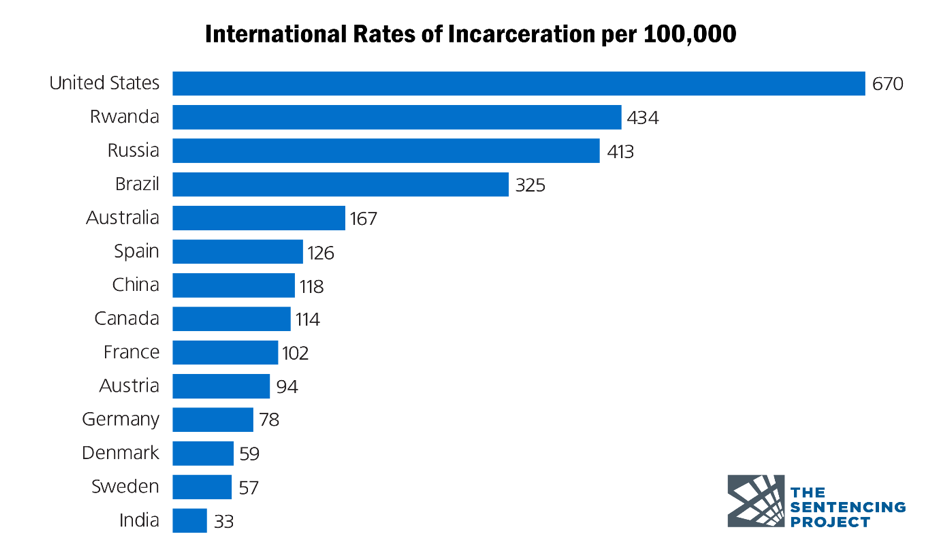
Figure 1: A comparison of incarceration rates among different countries
A historical perspective of US Incarceration
According to the Bureau of Justice Statistics (BJS), the total state and federal incarceration rate between 1925 and 1972 averaged 110 persons per 100000 population and 137 persons per 100000 population with highest imprisonment rate being 137 per 100000 population in 1937. This is regarded as a period of relative stability in the incarceration rates. However, an annual increase in the incarceration rates was recorded after this period, rising by an annual average of 6-8% up to the year 2000. There was a significant reduction in the incarceration rate after the turn of the millennium with the highest recorded imprisonment rate being 506 per 100000 population in 2008. This rate remained constant for more than a decade but was still significantly higher than the incarceration rates in other developed nations (Goldsmith, Halsey, and Groves, 2015). However, it should be noted that even though the national average of US incarceration rate in the US is the highest in the globe, there is a variation in the incarceration rates across the states and counties. Similarly, the US has experienced variations in the number of inmates held in federal prisons, state prisons, and county jails since the 1970s (See figure 2).
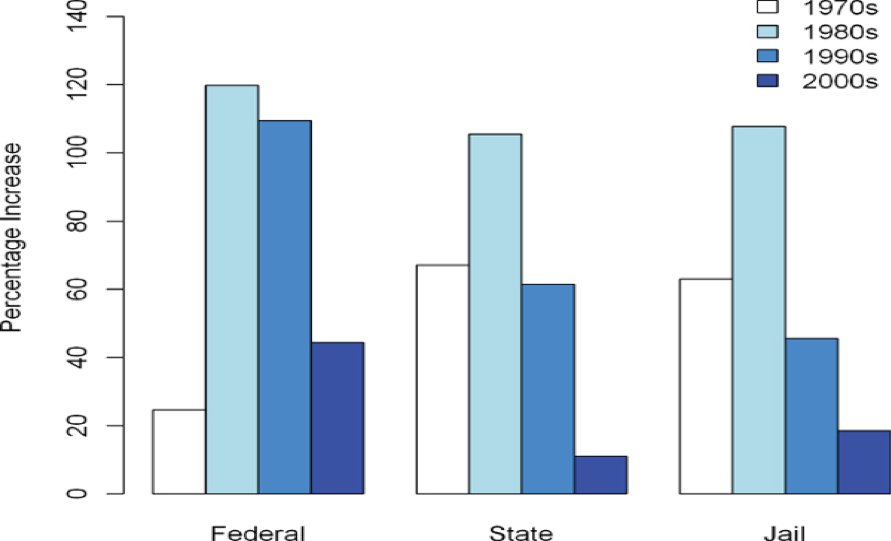
Figure 1: Change in the population of inmates in various US correctional institutions over time
Examining the Social Justice, Control Issues related to Mass Incarceration in the US
The rapid rise in the US prison population over the last thirty years can be attributed to radical changes in the national and state sentencing policies and crime control. The incarceration rate in the US is unparalleled in any western nation. It is only comparable to nations without robust liberal democracy. Kang-Brown and Subramanian (2017) note that the incarceration rate in the US over the last 30 years is unprecedented in history. Clear (2007) observes that mass incarceration without a focused consideration of alternative correctional strategies may entail a violation of personal liberties. In addition, Western and Petitt (2010) highlight the economic and social ramification of incarcerations. According to the authors, any period of incarceration entails a restraint of the incarcerated individual from pursuing their economic, social, political, and legal obligations.
For instance, at any time, there are more than 10 million Americans held in a detention facility. This figure includes the Americans in jail, restricted custody, jails, prisons, and other restrictive facilities. Scholars posit that the US justice system is unnecessarily biased towards restrictive measures to address all kinds of offenses and has been resistant to changes in strategies to address offensive conduct. According to Clear (2007), Americans erroneously believe that sending people to incarceration centers can reduce crime. However, data from social and scientific studies show that there is no correlation between imprisonment and dynamics in crime. Incarceration rates have increased continuously over the last 30 years. Crime rates have not been reducing at the same rate as the rate of increase in incarceration.
The State of Louisiana is one perfect example of the ineffectiveness of the social injustices related to incarceration. The state has the highest per capita incarceration rate in the US. However, 82% of the inmates held in various detention centers in the state at any particular time constitute nonviolent offenders (Western & Pettit, 2010). These are individuals who do not pose any danger to public safety. The interaction of such individuals with inmates incarcerated for criminal activities can potentially lead to negative influence. Such individuals are also likely to experience economic and social detriment once they gain freedom. Statistics show that individuals who have detained for various offenses are likely to experience social exclusion as they may be considered as deviants. They are also likely to lose their jobs either due to absenteeism during the detention period or due to perception as deviants.
Individuals who have been to prison lose out on the opportunity to experience relationships with family and friends. They are less likely to get married seeing that the time spent in prison denies them the opportunity to interact and establish relationships that can mature into marriage. All incarcerated individuals have friends and family outside the detention facility. Incarceration, therefore, affects both the incarcerated individual as well as the people close to them. Although it is widely accepted that incarceration severs relationships, it might have a more detrimental effect when the imprisoned individual has dependents. The incarceration of a spouse or a breadwinner in a family exposes the dependents to the risk of financial stagnation (Western and Pettit, 2010). This is worse if the individual has outstanding financial obligations such as loans and mortgages since the dependents are left at the mercy of the financial institutions.
Lyons and Walsh (2010) decry the immense economic setbacks that incarceration causes for the inmates. A detained individual loses access to their economic activities. The length of the incarcerations determines the number of financial losses that the individual will incur. For instance, it is estimated that a typical inmate incurs a deficit of $179,000 by the time they reach 48 years. This has a direct impact on their financial security in retirement. As earlier stated, the people left behind by the incarcerated individuals experience emotional and emotional support of their loved ones. Western and Petitt (2010) acknowledge that the challenges that emanate from incarceration are multipronged and effect a wide range of individuals and entities. If the arrested individual was employed, the employer will experience less productivity in the organization before they can recruit a replacement. The employer experiences talent loss. The employer also experiences financial loss if they had conducted additional training for the incarcerated employee.
A closer examination of the demographic composition of the inmates in jails and prisons in the US shows demographic bias against African American communities. Further, there are more inmates from poor communities than from affluent societies. For instance, data from the Justice Bureau indicates that in 2010, there were 586,700 black men in US jails and prisons compared to 235,000 Hispanic men, and 436,800. This is despite the US being a majority white nation. The same trend was recorded for female inmates. Research data also indicates that 50-60% of a young black in men in many major cities are either in jail, prison or free on parole terms. This may indicate a prejudice against the African American community considering. Although many petty offenses such as driving offenses are bailable, research shows that members of the black community often end up in detention facilities for such offenses leading to inconveniences, loss of economic time, and increasing their negative perception of the law enforcement agencies. Data from the Bureau of Justice also shows that the population of black inmates in US jails and prisons was six times that of the white inmates in 2013 (Glaze & Herberman, 2013).
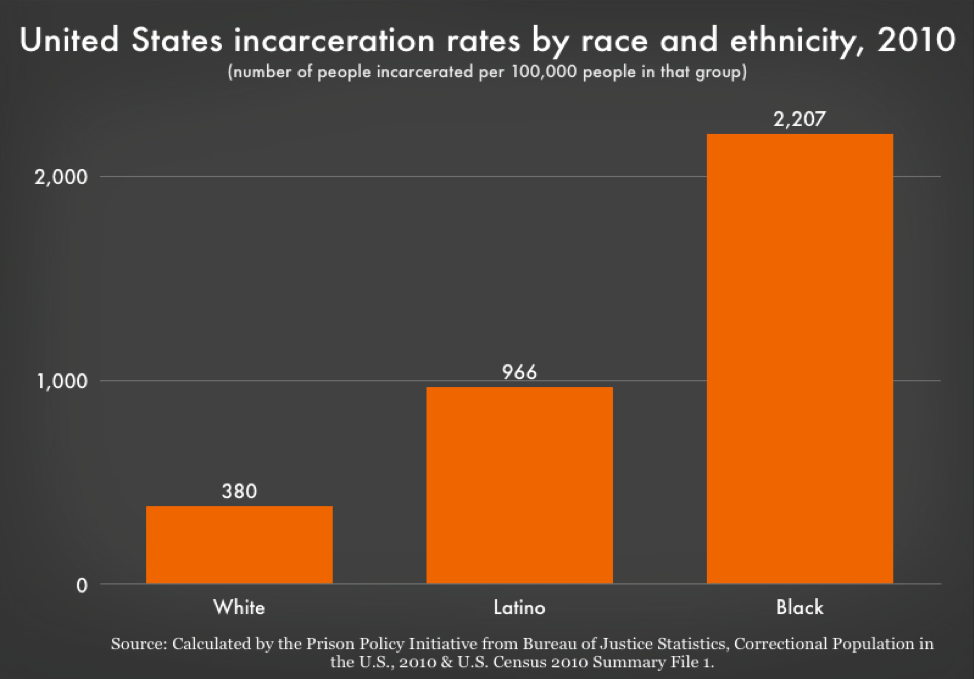
Figure 1: The proportion of US incarcerations by race and ethnicity in 2010, (Source: Bureau of Justice Statistics
Incarceration may also result in the violation of an individual’s rights to a dignified lifestyle. Some inmates report that they are exposed to humiliation molestation, poor health care, and poor hygiene when incarcerated. Some inmates have acquired diseases such as STDs, skin conditions, and HIV/AIDS from fellow inmates. Some of the prisoners that suffer this detriment are accused of non-violent crimes that can be punished using non-custodial approaches. In the state of Louisianna, for instance, 82% of the inmates are accused of nonviolent crimes that are bailable. The state courts have severally been criticized for delays in a court hearing for petty offenders. The preference by the US justice system to use incarceration as the main correctional strategy often results in the imprisonment of individuals accused of petty offenses especially when they cannot raise court fines and other charges (Dhondt, 2012). Scholars consistently propose alternative correctional approaches for petty offenders in place of imprisonment. For instance, in the UK the use of restorative justice approaches has been shown to be effective in reforming offenders including those accused of criminal offenses. Community service is another retributive approach that can be used to rehabilitate petty offenders.
Useem and Piehl (2008) add that incarceration not only renders emotional detriment on the individuals left behind but may also result in the untimely responsibilization of some of the dependents. For instance, research shows that elder children are forced to take care of their younger siblings when their parents are imprisoned. This can significantly affect their social progression as they will be unable to pursue their education. Children who take care of their siblings may not achieve social progression. In other instances, children are exposed to prison environments at a young age when they visit their parents or siblings at home. Prisons located in communities have also been shown to have a negative influence on the members of the community (Kang-Brown & Subramanian, 2017). For instance, in the recent past, there is a proliferation of prisons and jails in the rural areas of the US. As more prisons are relocated to the rural areas in the US, such areas report high rates of school dropout and a rise in deviant behaviors such as drug use and sexual violence.
Finally, incarceration has been used as a form of social control. The threat of a prison sentence is used to dissuade members of society from pursuing a particular cause. As recent as the 1980s, several Southern and Border states enacted Jim Crow Laws to disenfranchise black and minority communities. Politicians enact punitive laws to direct the opinions and characters of the societies that elect them. The politicians are also charged with the allocation of budgets for various programs including the establishment of correctional facilities.
Substantive Examples of Issues Related to Mass Incarceration
Racial Bias: 36,000 young black men are either incarcerated or missing in Philadelphia.
Social Justice: The threat of detention without representation is at the center of President Bush’s Executive Order 13769.
Social Control: Drug laws continue to increase the number of non-violent offenders in US prisons and jails.
Government Policies/Changes Related to Mass Incarceration
The rapid rise in mass incarceration in the US is also due to changes in government policies. Politicians influence the rise in incarceration rates. States make changes to sentencing laws such as California’s “Three Strike Rule”, thus increasing the number of incarcerated individuals. Three strike rule is derived from the sentencing guidelines adopted between 1975 and 1996 across the US. They are used in several states as a deterrent to recidivism. There is no consensus on the effectiveness of such approaches. The lack of alternative correctional measures means that many offenders have to serve prison sentences for offenses that merit non-custodial punishment. The adoption of standard parole laws enhance fairness I parole hearings.
The second policy change that altered the rate of incarceration in the US is the enactment of mandatory minimum sentences for a range of offenses. For instance, in the fight against the proliferation of drugs in the US, many states established punitive mandatory minimum offenses that significantly increased the number of individuals imprisoned for drug-related charges. Politicians too contribute to mass incarceration in the US. A recent case is President Trump’s Executive Order 13769 that restricted the entry into the US for individuals from several Muslim nations. Politicians are charged with making laws. As they continue enacting laws and determining the sentences for offenses related to such laws, this is likely to influence the rate of incarceration. The widespread outcry against mass incarceration has, however, coerced the federal government and state governments to look for strategies to address the crisis of mass incarceration.
Additional Resources
Books:
Imprisoning Communities: How Mass Incarceration Makes Disadvantaged Neighborhoods Worse by Todd Clear
Tackling Correctional Corruption: Best Practice in Detection and Prevention by Goldsmith, Halsey, and Groves
Reports:
Collateral Costs: Incarceration’s Effect on Economic Mobility by Bruce Western and Beck Pettit Accessible at http://www.pewtrusts.org/uploadedFiles/wwwpewtrustsorg/Reports/ Economic Mobility/Collateral%20Costs%20FINAL.pdf
Journal Articles
Children with incarcerated mothers: Developmental outcomes, special challenges, and recommendations. D.H Dallaire
Correctional Populations in the United States, 2012. Washington, DC: U.S. Department of Justice, Bureau of Justice Statistics. E.J. Herberman,
Websites:
https://www.nap.edu/read/18613/chapter/4#
Bibliography
Bennett, T. & Holloway, K., 2009. The Causal Connection Between Drug Misuse and Crime. British journal of criminology, 49(4), pp. 513-531.
Clear, T. R., 2007. Imprisoning Communities: How Mass Incarceration Makes Disadvantaged Neighborhoods Worse. Oxford University Press, p. 7.
Cullen, F., Jonson, C., and Nagin, D. 2011. Prisons do not reduce recidivism: The high cost of ignoring science. The Prison Journal, 91(Suppl.), S48-S65.
Dallaire, D.H. 2007. Children with incarcerated mothers: Developmental outcomes, special challenges, and recommendations. Journal of Applied Developmental Psychology, 28(1), 15-24
Dhondt, G. 2012. The bluntness of incarceration: Crime and punishment in Tallahassee neighborhoods, 1995 to 2002. Crime, Law and Social Change, 57, 1-18.
Farrer, T.J., and Hedges, D.W. 2011. Prevalence of traumatic brain injury in incarcerated groups compared to the general population: A meta-analysis. Progress in Neuro-Psychopharmacology and Biological Psychiatry, 35(2), 390-394.
Glaze, L.E., and Herberman, E.J. 2013. Correctional Populations in the United States, 2012. Washington, DC: U.S. Department of Justice, Bureau of Justice Statistics.
Goldsmith, A., Halsey, M., and Groves, A. 2015. Tackling Correctional Corruption: Best Practice in Detection and Prevention, London: Palgrave.
Kang-Brown , J. & Subramanian, R., 2017. Out of Sight: The Growth of Jails in Rural America, New York, NY: Vera Institute of Justice.
Newburn, T., 2017. Criminology. 2nd ed. Abingdon: Routledge.
Lyons, S. and Walsh, N., 2010. Money Well Spent: How Positive Social
Investments Will Reduce Incarceration Rates, Improve Public Safety, and Promote
Well-Being of Communities. Washington, D.C.: Justice Policy Institute Report
Stohr; M., Walsh, A., Hemmens,C., (2008). Corrections: A Text/Reader. Sage
Seddon, T., 2004. Drugs, Crime and Social Exclusion. British Journal of Criminology, Volume 46, p. 680–703.
Useem, B., and Piehl, A.M., 2008. Prison State: The Challenge of Mass Incarceration. New York: Cambridge University Press.
Western, B and Pettit, B., 2010. Collateral Costs: Incarceration’s Effect on Economic Mobility. Washington, D.C.: Pew Charitable Trusts, p.4.
 Nettstedstittel